
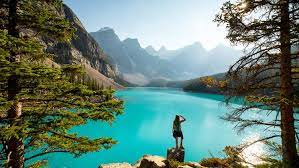
A lake is a body of fresh or saltwater, normally found in a basin (a sunken area or one with lower elevation than the area surrounding it) surrounded by land.
Lakes can be formed naturally via several different Earth physical processes, or they can be artificially created by humans, such as in old mining craters or by damming a river.
Earth is home to hundreds of thousands of lakes that vary in size, type, and location. Some of these lakes are located in very low elevations, while others are high in mountain ranges.
This list featuring Earth’s 10 highest lakes is arranged by their altitude. Some of the highest are only temporary lakes, as they exist in extreme locations in mountains, glaciers, and volcanoes and consequently freeze solid in the winter or drain in the fall.
Many have not been reached by western explorers and have been identified only by satellite photography. As a result, their existence may be in dispute, and a few appear to have gone extinct.01of 10
Ojos del Salado

Elevation: 20,965 feet (6,390 meters)
Location: Chile and Argentina
Ojos del Salado is the world’s highest active volcano as well as the world’s highest lake. The lake is on its eastern face. It’s only 100 meters in diameter, so its small size leaves some visitors underwhelmed. Still, it is the highest pool of water on the planet.
Lhagba Pool (extinct)

Elevation: 20,892 feet (6,368 meters)
Location: Tibet
The Llagba Pool, located a few miles north of Mount Everest, was once considered the second-highest lake. However, satellite images from 2014 showed that the lake has dried out. Llagba Pool is now considered extinct.
Changtse Pool

Elevation: 20,394 feet (6,216 meters)
Location: Tibet
Changtse Pool is meltwater that has developed in the Changtse (Beifeng) Glacier, near Mount Everest. But after examination of Google Earth images, Changtse Pool, too, appears not to exist.
East Rongbuk Pool

Elevation: 20,013 feet (6,100 meters)
Location: Tibet
The East Rongbuk Pool is a temporary lake of meltwater high in the Himalayas. It forms when melting snow meets at the eastern tributary of the Rongbuk Glacier and the Changtse Glacier. The pool drains at the end of the season and becomes dry.
Acamarachi Pool

Elevation: 19,520 feet (5,950 meters)
Location: Chile
The stratovolcano containing the lake, also known as Cerro Pili, may be extinct. When it was known to exist, it was only 10 to 15 meters in diameter.
Cerro Walter Penck/Cerro Cazadero/Cerro Tipas

Elevation: 19,357 feet estimated (5,900 meters)
Location: Argentina
Cerro Walter Penck (aka Cerro Cazadero or Cerro Tipas) is just southwest of Ojos del Salado.
Tres Cruces Norte

Elevation: 20,361 feet (6,206 meters)
Location: Chile
Nevado de Tres Cruces volcano last erupted 28,000 years ago. The north face is where the lagoon sits, part of the larger national park.
Lake Licancbur

Elevation: 19,410 feet (5,916 meters)
Location: Bolivia and Chile
High Andean lakes such as Lake Licancbur are analogous to former Martian lakes as the surface of the Red Planet dried up, and are being studied to learn about what they may have been like. Lake Licancbur is slightly saline and may be heated geothermally. It is near the Atacama Desert.
Aguas Calientes

Elevation: 19,130 feet (5,831 meters)
Location: Chile
The name, which is also the name of the volcano where it is located, likely comes from the volcano-warmed waters; the lake is a crater lake at the volcano’s summit.
Ridonglabo Lake

Elevation: 19,032 feet (5,801 meters)
Location: Tibet
Ridonglabo Lake is also in Mount Everest’s neighborhood, at 8.7 miles (14 kilometers) northeast of the peak.
Source: Thoughtco.com